Opening doors to homeownership in Washington state


THE MISSION

Rebuilding the Path to Homeownership
Neighborhood roots. Financial security. A deep sense of belonging. Homeownership—a cornerstone of asset-building across generations—nurtures each of these. But buying a first home is out of reach for many working families in Washington state.
The shortage of affordable starter homes can be traced to technical and non-technical challenges in every area of the housing production system. To close the gap, we have to address each of the challenges and all of their complex interactions.
Because previous efforts didn’t approach the crisis this way, they didn’t solve the problem. We need to fundamentally reframe our thinking.

THE FRAMEWORK
A Boldly Holistic Solution
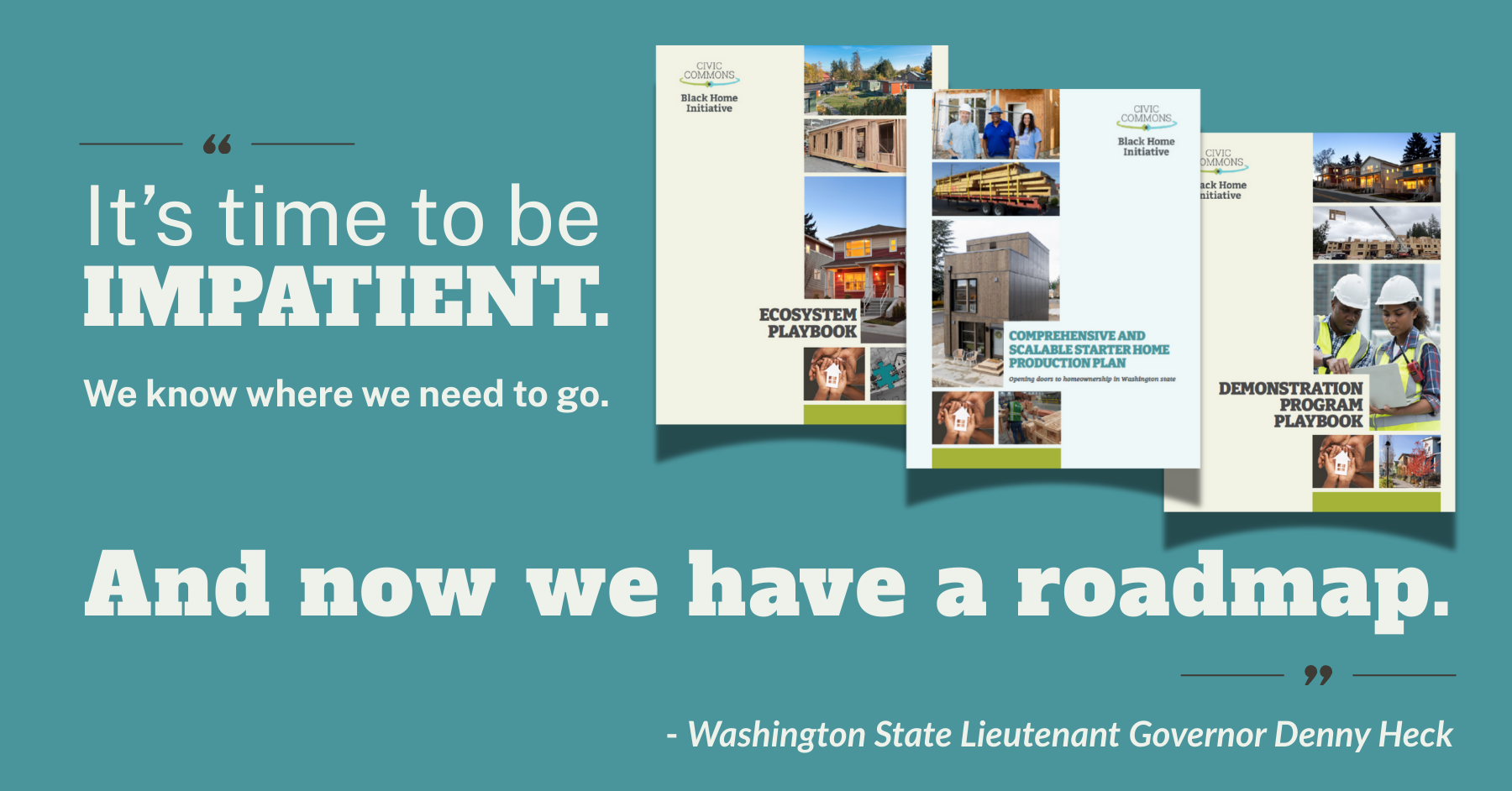
The Starter Home Plan and its two accompanying Playbooks address all four levers of change: land and development, policy and regulation, financing, and workforce.
They contain testable hypotheses and actionable recommendations designed to accelerate and scale starter home production in communities around the state.
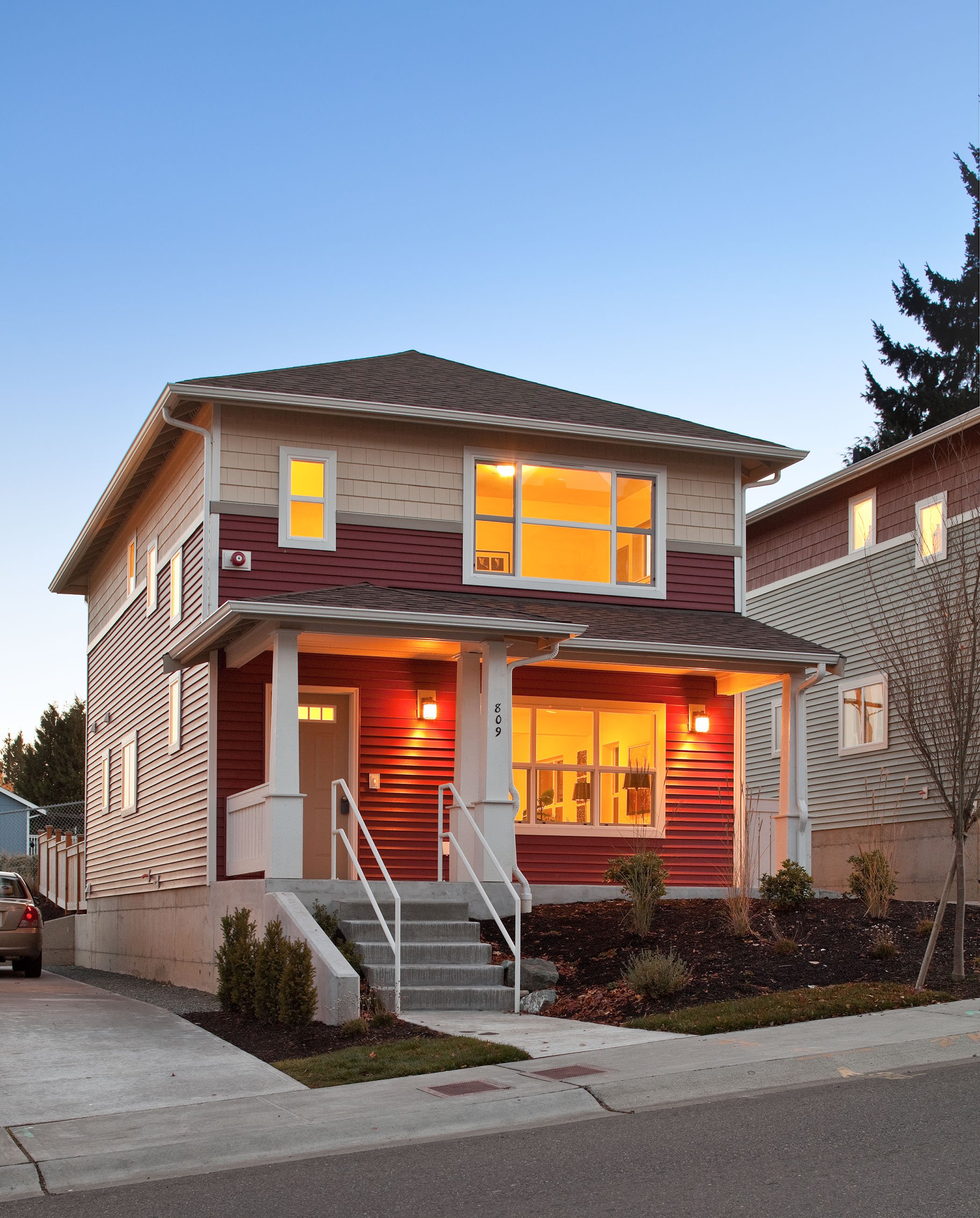
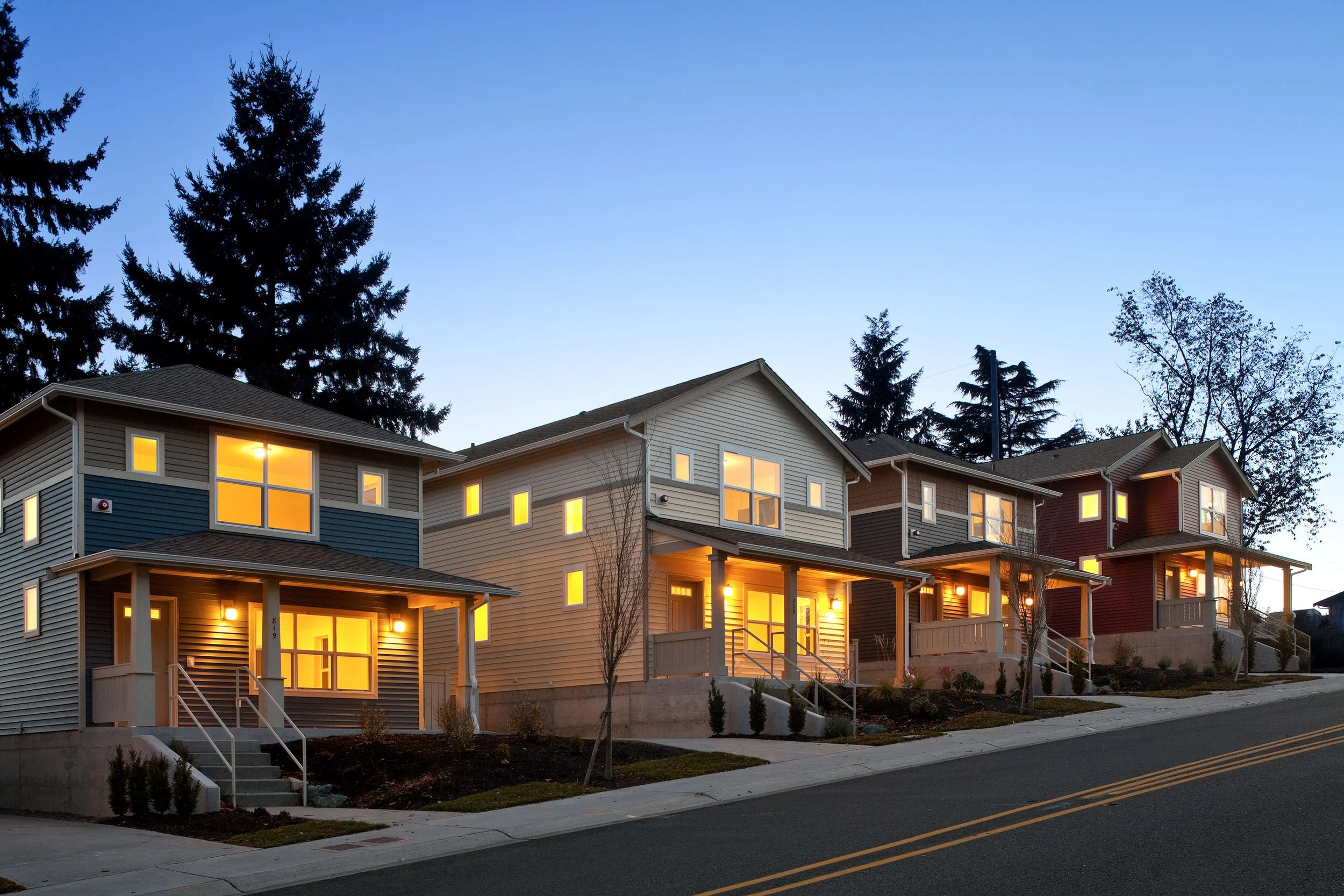
The hypotheses and recommendations were framed by six guiding assumptions:
1. Modest size, basic amenities
In order to produce new homes affordable to low- and moderate-income households, these homes will need to be a maximum of 1,400 square feet and furnished with basic amenities (generally understood to be a starter home).
2. Standardization
In order to produce these starter homes at scale, the entire ecosystem must lean into standardization as a practice.
3. Common and repeatable design elements
In order to standardize the starter home product, these homes will have common and repeatable design elements, building components, and systems. Starter home products will include thoughtful provisions for future energy saving and efficiency enhancements (solar-ready, etc.) as well as the adaptability and flexibility of space that allows for potential expansion.
4. Repeatable and replicable practices
In order to standardize starter homes, repeatable and replicable practices must be in place in key areas across the starter home ecosystem, including design, workforce development, policy, and resulting regulatory modifications.
This will:
- allow for expedited permitting for offsite construction because of standardization.
- include funding programs from financial institutions that align with offsite construction development timelines.
- rely on public, private, and philanthropic funds to offset the cost premium for early phase projects prior to industry adoption of standardized starter homes.
- require a workforce that can deploy standardized offsite methods.
5.Typology
In order to site homes in rural, urban, and suburban communities across the state, differences in the typology must be considered. For example, urban settings may dictate multi-unit structures while detached homes might be suitable for rural areas.
6. Perception
In order to drive the adoption of offsite products, end buyers must not be able to discern if the home was built by incorporating offsite practices. It must be purely a value-added “means and methods” decision by the builder/developer.